
Tax reporting
Making Tax Digital April 2027: Who Must Join and How to Prepare
Check whether April 2027 Making Tax Digital applies to your self-employment or rental income. See how to prepare software, records and updates.
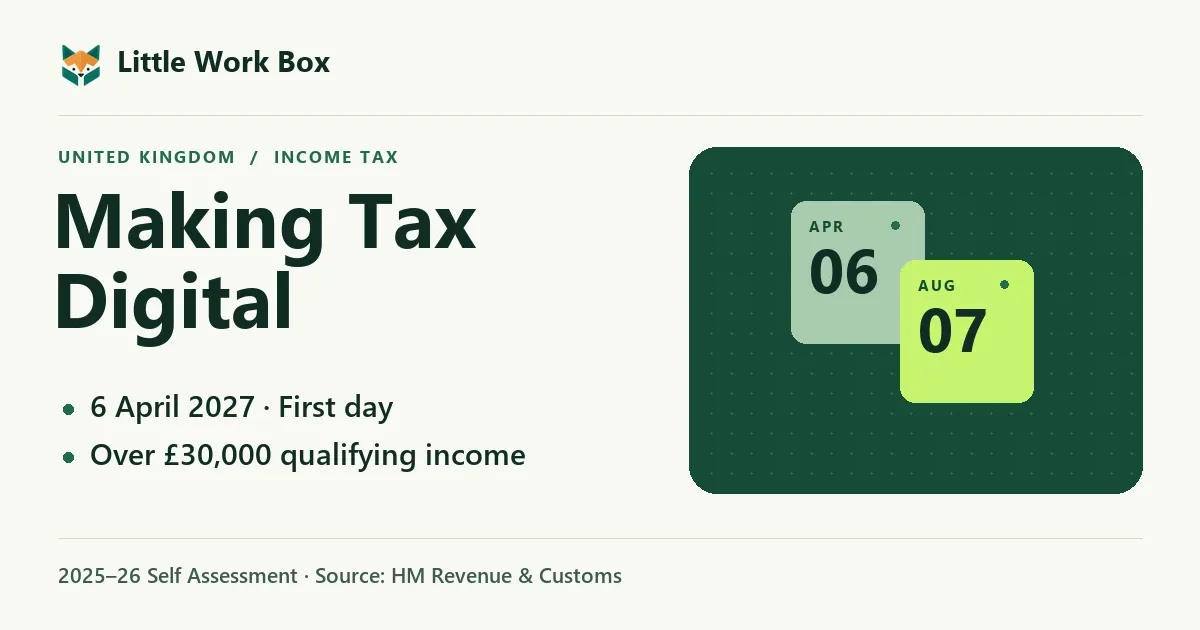
Making Tax Digital for Income Tax starts on 6 April 2027 for eligible sole traders and landlords whose 2025–26 qualifying income was more than £30,000. Add gross self-employment and property income before expenses to work out whether you cross the threshold. If you already joined in April 2026, continue following your existing schedule.
Who needs to join in April 2027?
The April 2027 wave applies to individuals registered for Self Assessment who have qualifying income from self-employment, property, or both. HMRC generally uses the figures from your 2025–26 Self Assessment return to determine whether you need to join. Salary and dividends do not count towards this threshold.
- Example 1. A sole trader receives £26,000 from clients and £6,000 in gross rental income. The combined £32,000 is above the threshold, even if their expenses bring profit below £30,000.
- Example 2. A landlord with £30,000 of qualifying income and £18,000 of employment income does not cross the April 2027 threshold on these figures. Check the separate April 2028 threshold against the 2026–27 return.
- Example 3. A sole trader who exceeded £50,000 in 2024–25 may already be in the April 2026 wave. The new threshold does not restart their reporting year.
Review HMRC’s guidance if you have jointly owned property, have recently started or ceased trading, or may qualify for an exemption. The £30,000 test uses your qualifying income, which can differ from the total income shown across all sources on your return.
What changes in practice?
Use HMRC-compatible software to keep digital records and send quarterly updates for each business or property business. If you use a spreadsheet, confirm that your software or bridging product can take those records through to HMRC. Before importing a test file, you can check its CSV encoding.
Quarterly updates are cumulative summaries of income and expenses. For a 6 April 2027 start, the usual submission deadlines are 7 August 2027, 7 November 2027, 7 February 2028 and 7 May 2028. You still finalise and submit the annual tax return through compatible software. Check the annual filing and payment dates separately from the quarterly schedule.
Preparation checklist
- Check the gross amounts on your 2025–26 return. Separate employment income, property income and each trade.
- Check whether an exemption applies and whether you already joined under the earlier threshold.
- Agree with your accountant or agent on who signs up, maintains records, reviews each update and files the annual return.
- Compare compatible products using a test month with realistic transactions. Test separate income sources, expenses, and correction of a misclassified payment.
- Sign up and connect your software. Set quarterly reminders and give yourself time to review the figures before each deadline.
Frequently asked questions
Is the threshold based on profit?
It generally uses qualifying gross income before expenses. Use HMRC’s guidance for the treatment of joint property and other special cases.
What if I have exactly £30,000 of qualifying income?
The April 2027 threshold is more than £30,000. Exactly £30,000 does not trigger that wave by itself. Check the separate start dates for other tax years.
Do I have to pay tax quarterly?
The updates report your figures. The existing Income Tax payment deadlines and any payments on account still apply.
Can I be exempt if I cannot reasonably use digital tools?
HMRC considers digital exclusion and other specific exemptions. Follow the official eligibility and exemption process before deciding whether you must start.